

Pergament cartonboard packaging is approved for direct contact with food. This is not a sales promise: we hold a sanitary approval issued by Moldova’s National Agency for Public Health (ANSP) for our own product — for the boxes we print and die-cut, not merely for the board we buy. Below are the document numbers, the laboratory results in figures and the files themselves.
ANSP sanitary approval for our product
Sanitary approval no. P-23739/2026 of 4 August 2026, valid until 4 August 2029.
- Scope: materials in contact with foodstuffs — custom cartonboard boxes of any size, with or without a logo;
- Manufacturer: „CĂPĂȚÎNĂ-PRINT” S.R.L., Chișinău, 170 Columna str. — the legal entity behind the Pergament printing house;
- Field of use: food contact, packaging;
- Compliance: the sanitary regulation on materials and articles intended to come into contact with food (Government Decision 308/2011) and the regulation on plastic materials (Government Decision 278/2013);
- Issued by: Agenția Națională pentru Sănătate Publică, director Vasile Gustiuc; the document carries a MoldSign electronic signature.
Download sanitary approval P-23739/2026 (PDF)
Laboratory testing: the actual numbers
The approval was not granted on the strength of supplier paperwork: a finished, logo-printed box made on our own line was submitted for testing. The sample was taken on 20 July 2026 and tested between 21 July and 4 August 2026 at the ANSP Laboratory Testing Centre, accredited by the National Accreditation Centre MOLDAC.
| Parameter | Result | Permitted level | Method |
|---|---|---|---|
| Overall migration of components | 4.3 mg/dm² (±0.4) | max. 10 mg/dm² | SM EN 1186-3:2022 |
| Lead | < 0.005 mg/dm³ | max. 0.01 mg/dm³ | POS 1.31, ed. 1 |
| Chromium | < 0.01 mg/dm³ | max. 0.1 mg/dm³ | POS 1.31, ed. 1 |
Overall migration is the key figure for food packaging: it shows how much substance could in principle transfer from the packaging into the product. Our box measured 4.3 mg/dm² against a limit of 10 — more than a twofold margin. Lead and chromium were below the quantification limits of the method.
Download test report no. 51034746 (PDF)
The board: virgin-fibre GC1 from Europe
For food packaging we use coated multilayer GC1 cartonboard from 195 to 450 g/m², produced in Finland and supplied to Moldova with its own ANSP sanitary approval — no. P-23544/2026 of 21 April 2026, valid until 30 April 2029. The same approval covers greaseproof and glassine papers, siliconised parchment, kraft and PE/PET-coated board — the materials used for inserts and barrier layers.
We import board directly from the mills, with no middlemen. For the customer that means not only a price without a markup, but consistency: run after run the same material arrives, with the same stiffness and the same shade of white.
Inks: a low-migration series for food packaging
Food packaging runs are printed with hubergroup MGA NATURA 5250 inks — a dedicated offset series for food packaging rather than ordinary printing ink:
- formulated mineral oil free and low-migration — overall migration below 10 mg/dm²;
- developed under the EuPIA GMP “Printing Inks for Food Contact Materials”, with all ingredients listed in annex 2 or 10 of the Swiss Ordinance SR 817.023.21 — the strictest positive list in the industry;
- allows the finished packaging to meet Regulation (EC) No 1935/2004 and US FDA provisions for food contact materials;
- does not dry by oxidation, so no odorous decomposition products are formed: in the Robinson organoleptic test (EN 1230) the print does not affect the odour or taste of the packed food;
- finished with ACRYLAC MGA water-based overprint varnish from the same series, which also provides rub resistance.
Printing is applied to the outer face of the pack — the inner face, the one turned towards the product, is left unprinted. That is how the food packaging industry works, and it is exactly the scheme low-migration inks are designed for.
Which products our packaging suits
The sanitary approval and the manufacturer’s declaration cover dry and bulk goods, bakery and confectionery, fruit and vegetables — the core range of bakeries, pastry shops, HoReCa and retail chains.
Wet, greasy or hot products need a barrier in addition to plain board. We select it for the job: a greaseproof insert or parchment, lamination, PE- or PET-coated board. If the pack will be heated in a microwave or an oven, tell us at the quotation stage — those conditions call for a different substrate and a heat-resistant ink series.
Store the packaging in a dry, ventilated space at +5 to +30 °C, away from moisture and direct sunlight.
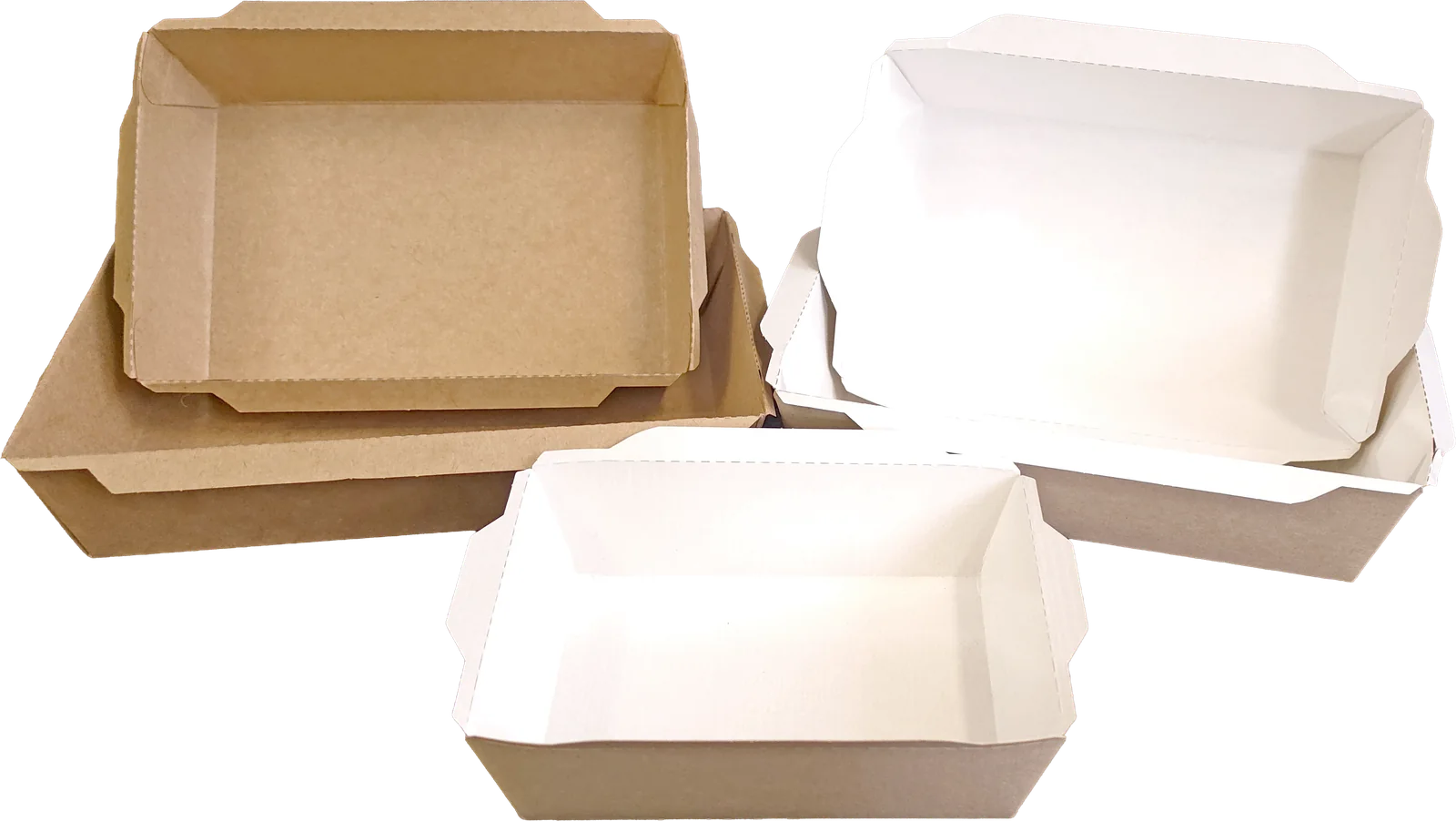
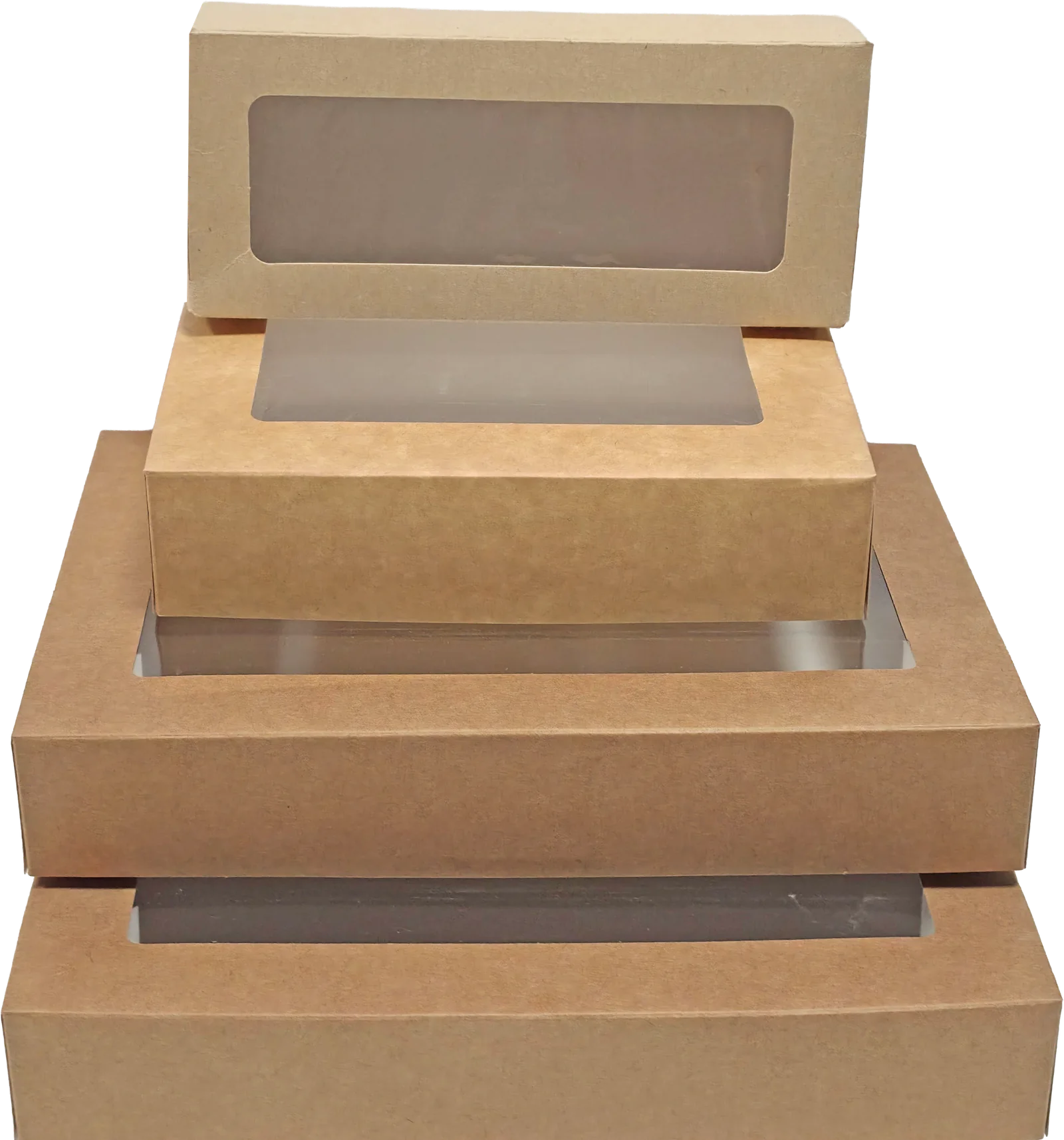
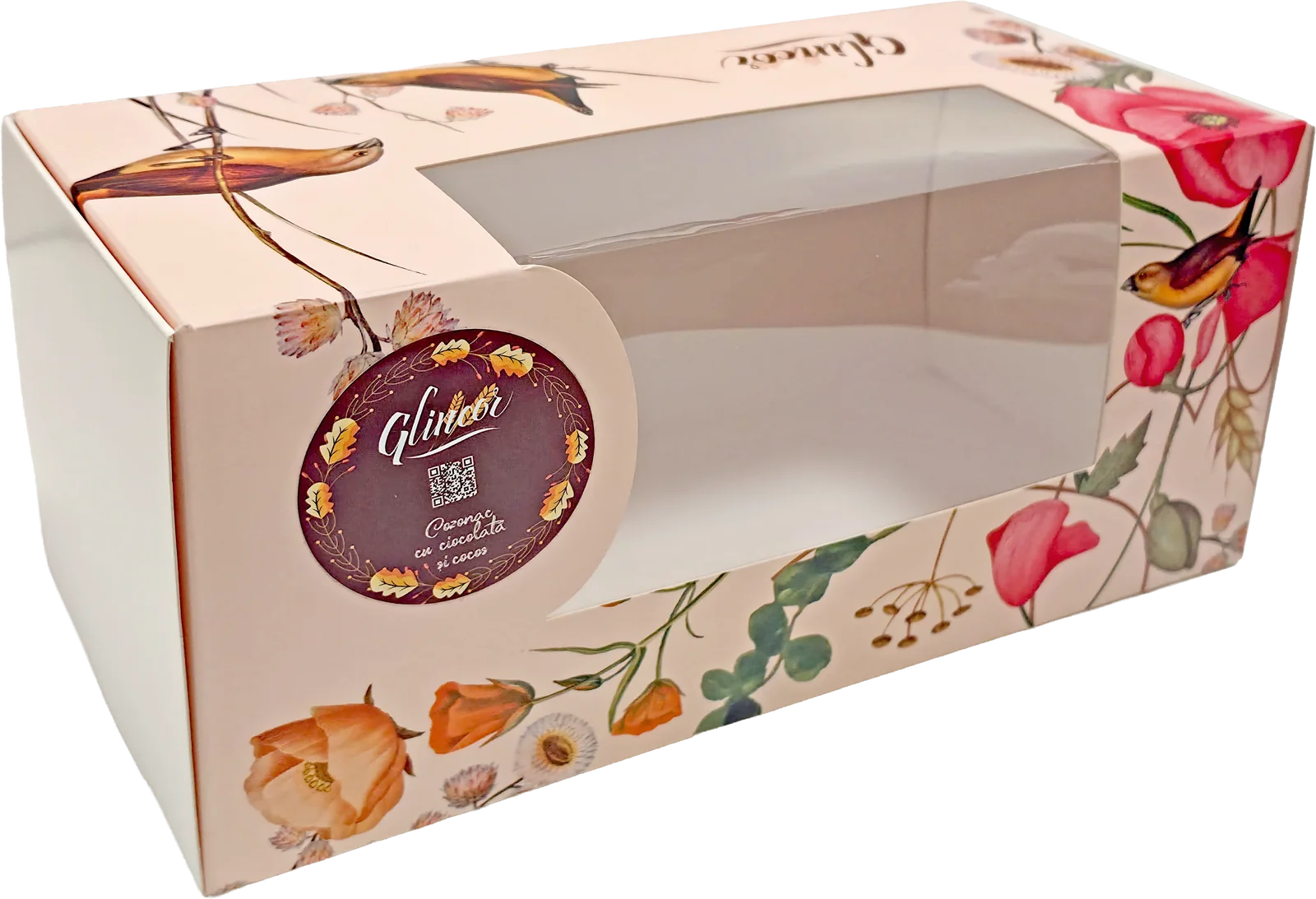
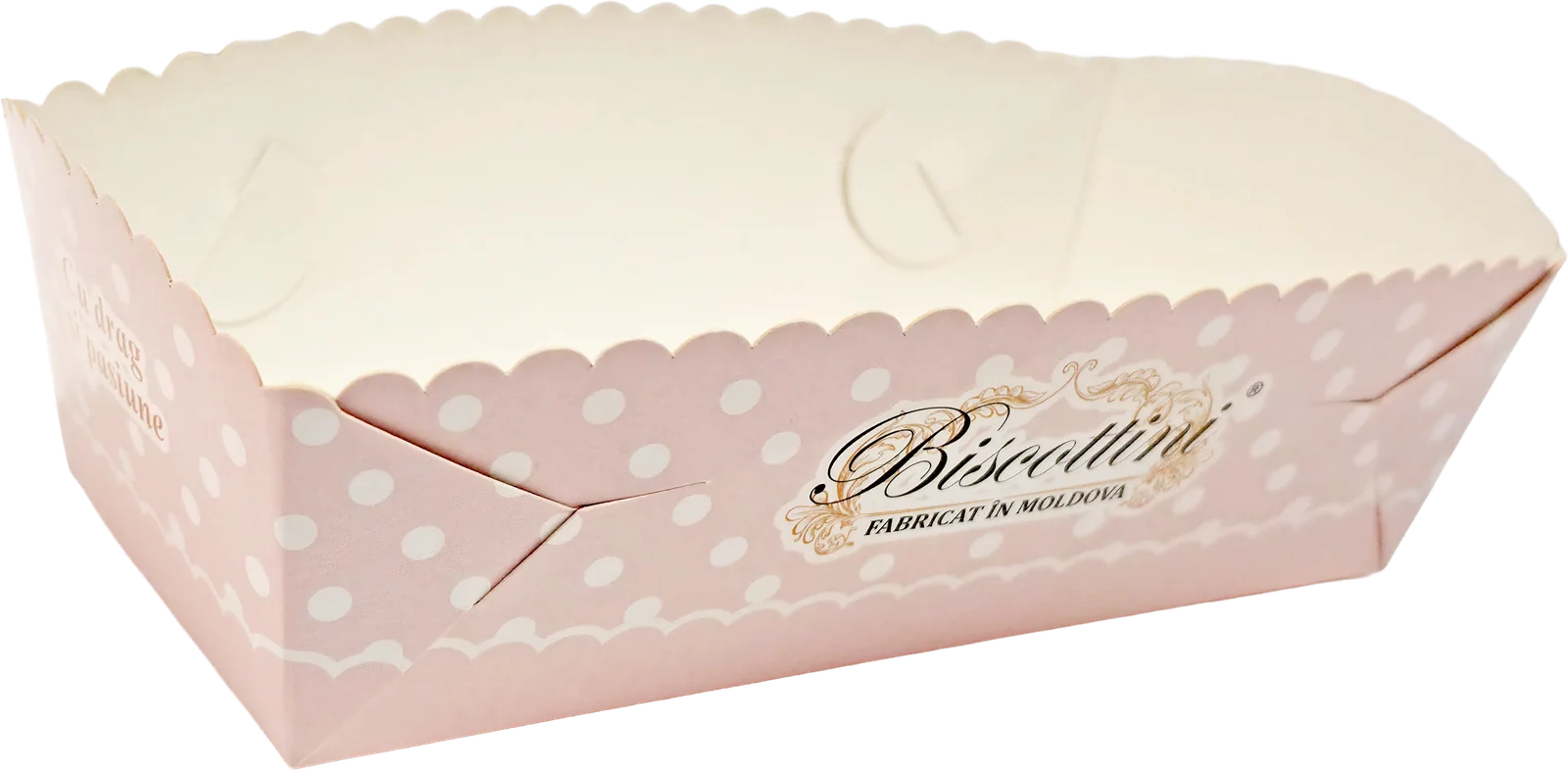
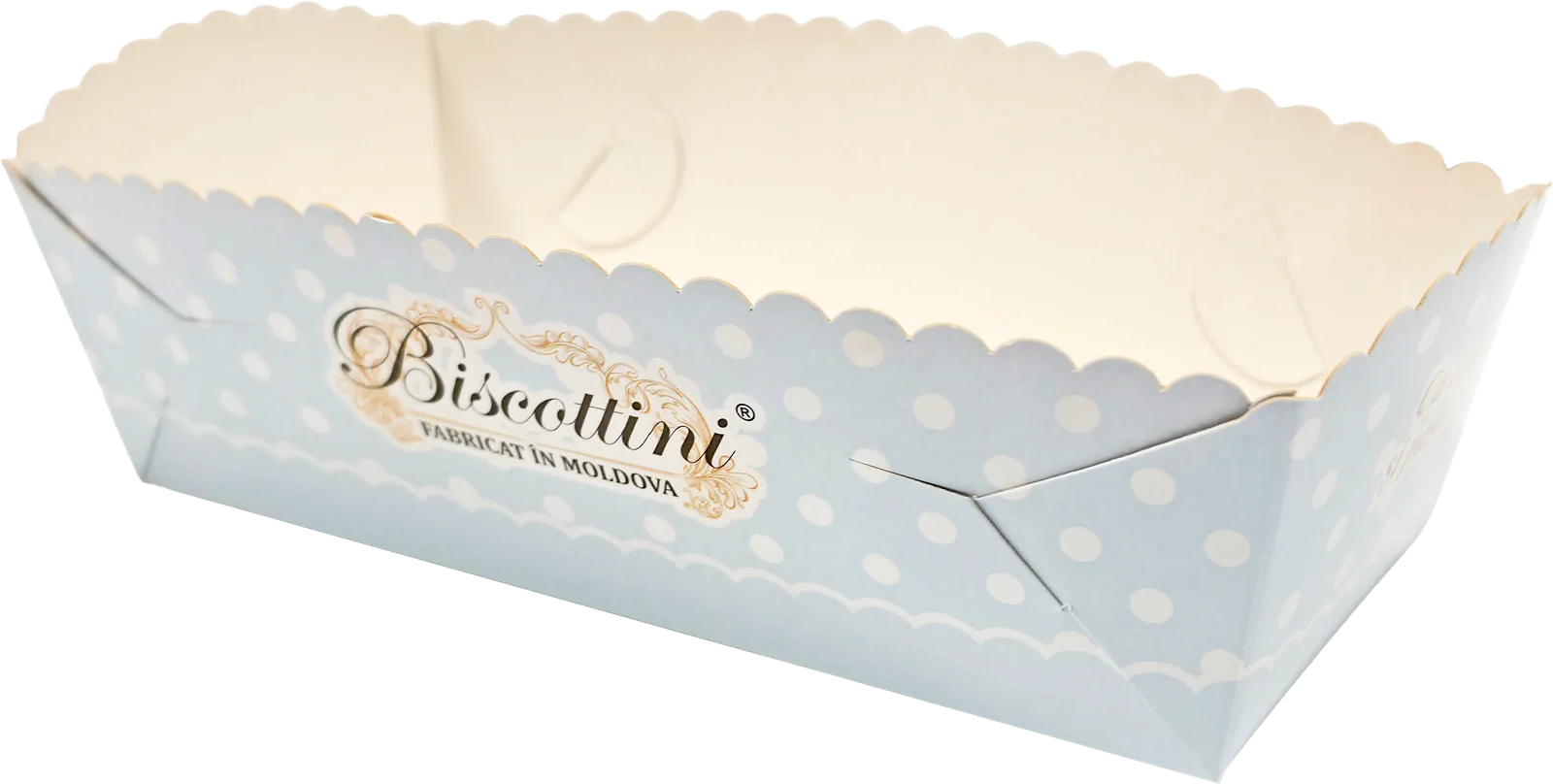
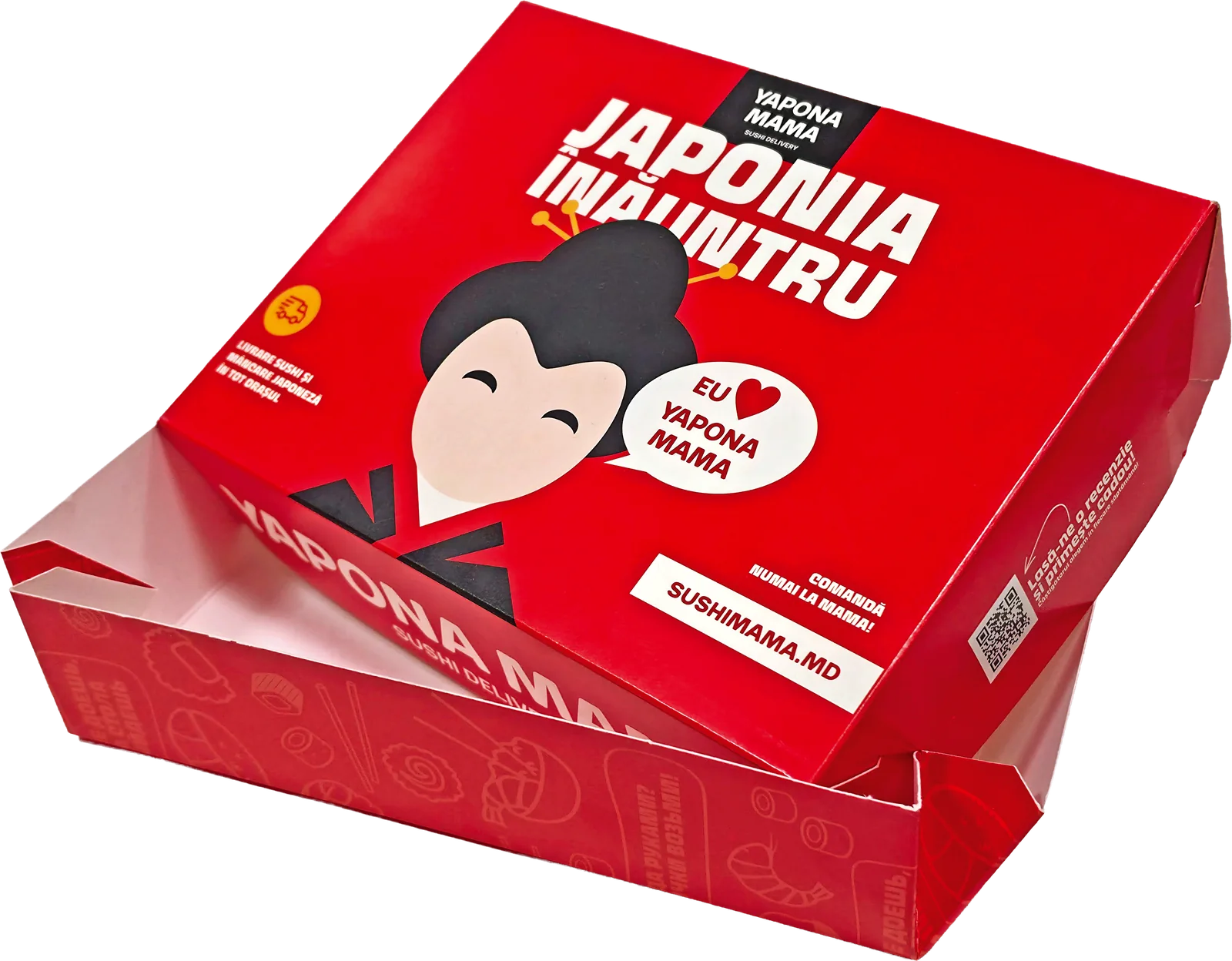
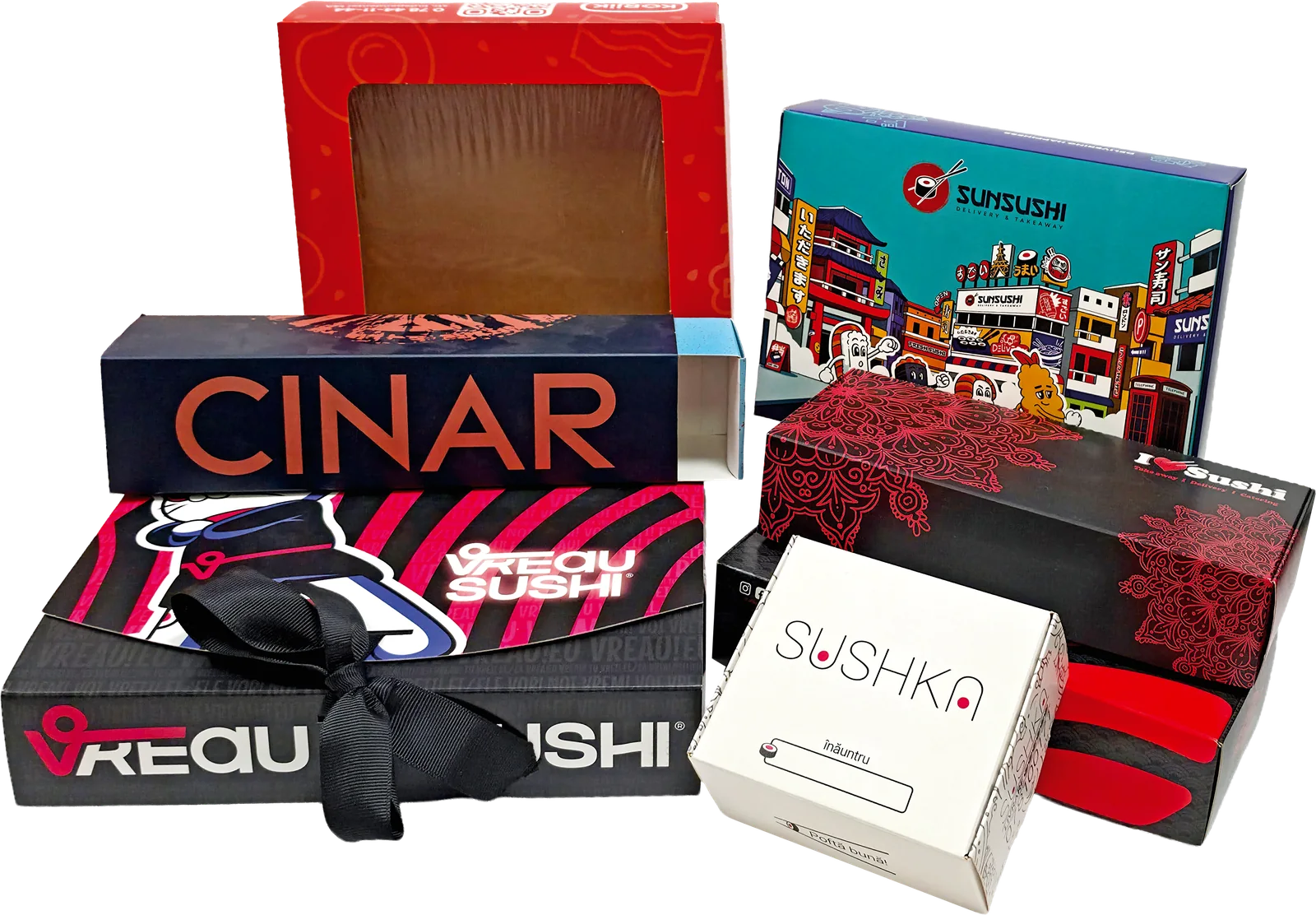
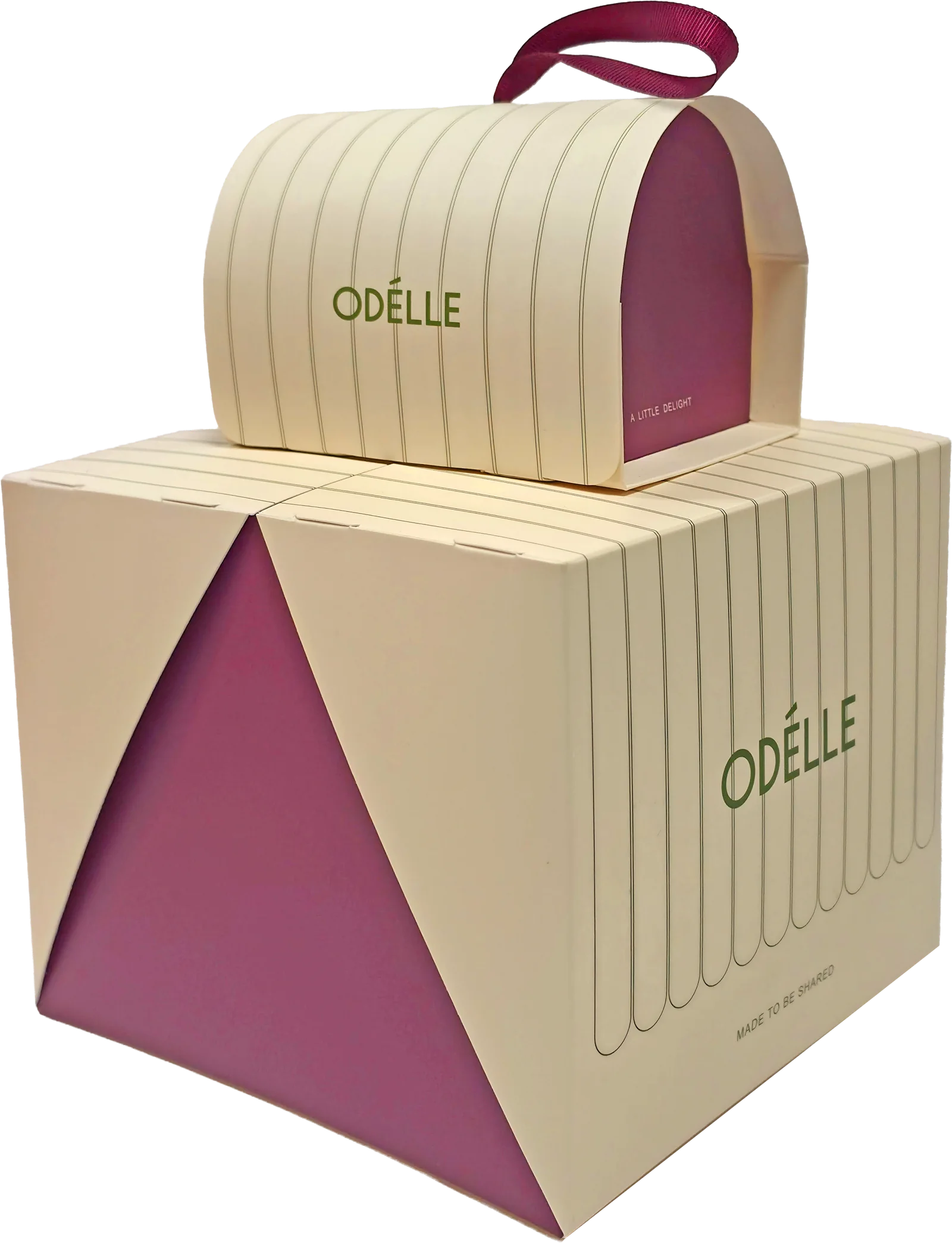
Our work: food packaging
The paperwork you receive with the run
A retail buyer, a production technologist and a HACCP auditor need a file, not verbal assurances. On request we provide:
- a copy of the ANSP sanitary approval for our product;
- the laboratory test report with migration and heavy metal results;
- the manufacturer’s declaration of conformity (Law 306/2018 on food safety, Government Decision 308/2011);
- the product technical specification — material, grammage, construction, joining method;
- raw material documents — the sanitary approval for the board and the technical data sheet for the inks.
The file is prepared for the specific order, usually within one working day.
Frequently asked questions
Do you hold an approval for manufacturing food packaging?
Yes. ANSP sanitary approval no. P-23739/2026 of 04.08.2026 is valid until 04.08.2029 and was issued for our own product — cartonboard boxes for food contact, not just for the raw material we purchase.
Can food be placed straight into the box, without a bag?
For dry and bulk goods, bakery, confectionery, fruit and vegetables — yes. Wet and greasy products need a barrier: a greaseproof insert, lamination or PE/PET-coated board. We decide this at the quotation stage.
Does the printing transfer odour or taste to the product?
No. Food packaging is printed with the low-migration MGA NATURA series, free of mineral oils: it does not dry by oxidation and forms no odorous decomposition products, and its organoleptic performance is confirmed by the Robinson test to EN 1230. Printing is applied to the outer face of the box.
How far are the results from the limits?
Overall migration came out at 4.3 mg/dm² against the permitted 10 mg/dm² — more than a twofold margin. Lead and chromium are below the quantification limits.
Will you supply documents for a retail chain and a HACCP file?
Yes. On request we hand over the full package: the sanitary approval, the test report, the declaration of conformity, the technical specification and the raw material documents.
How long are the documents valid?
The sanitary approval for the product runs until 04.08.2029 and the one for the board until 30.04.2029. We renew them ahead of expiry.
Need food-safe packaging with documentation?
Tell us what you pack, in what quantity and by when — we will work out the structure and the material, and cut a prototype box on the plotter from 30 minutes. See packaging for food and HoReCa, production and technology, or write to us on the Contacts page.