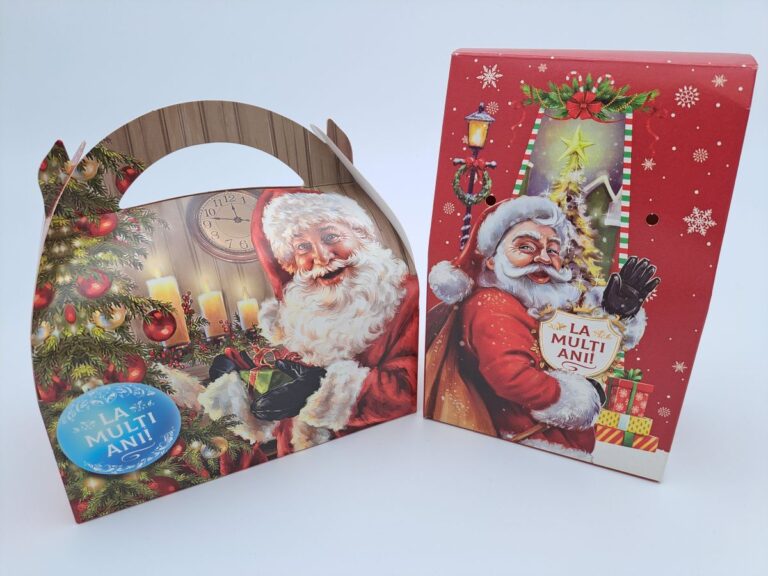
A cosmetic box lives two lives: first on the shelf, where it has a few seconds to catch the eye, then in the customer’s hands, where it is judged by touch. Both lives start with the same decision — the board grade. Here is what you actually choose from in practice, why grammage alone guarantees nothing, and where certification for product contact becomes mandatory.
Three board types cosmetic boxes are made from
GC1 — virgin-fibre cartonboard with a white back. A coated face, a white reverse, and nothing but virgin fibre in the composition. The highest whiteness and stiffness at equal grammage. The natural choice for skincare, serums and selective lines: Pantone colours print clean on the coated face, and the white reverse does not give the box away when the customer opens it. It costs more than GC2 — you pay for whiteness and composition.
GC2 — coated face, cream back. The workhorse of the mid-market: also virgin fibre, but with a cream-coloured reverse. If the inside of the box plays no part in the design, the buyer will never spot the difference from GC1 — and the print run comes out noticeably cheaper. Most mass-market cosmetics are printed on GC2.
Greyboard, 1.5–3 mm, for paper wrapping. It is never printed directly: a printed sheet or a design paper is wrapped — glued — around it. This is how rigid boxes are made, the stiff cases used for perfumery, gift sets and advent calendars. They carry the weight of a glass bottle, keep their shape at the lid and feel expensive in the hand.
A separate note on recycled grades with a grey back (GD): they are almost never used in cosmetics — lower whiteness and stiffness, and recycled fibre is not admissible for direct product contact.
Grammage: start from the product, not from “thicker is better”
- 230–270 g/m² — light products: tubes up to 50 ml, sachets, cardboard sleeves;
- 270–325 g/m² — the standard for creams, serums, small glass jars;
- 350 g/m² and up — heavy bottles and large boxes; beyond that you are in wrapped-greyboard territory.
Two things a price list will not show you. First, stiffness depends not only on grammage but also on fibre direction — we lay out the sheet so that the panels work for stiffness and the creases fold without cracking. Second, boards of the same grammage differ in thickness and bulk from mill to mill, so grades should be compared by stiffness, not by the number on the label. That is why “what grammage do I need?” without a mock-up is guesswork — a prototype answers precisely.
Finishing that sells from the shelf
- Lamination — matte, gloss or soft touch; the latter delivers that velvety premium feel;
- Spot UV varnish — a glossy logo or pattern over matte lamination: the classic pairing of cosmetic packaging;
- Hot foil stamping — gold, silver, holographic; plus embossing for logos and textures;
- A transparent film window — we apply it on a full-servo window patching machine, not by hand: the film sits perfectly flat, and on volume runs the window does not slow down gluing.
A frequent trap: metallic Pantone inks go dull under matte lamination. A metallic effect is safer done with hot foil or printed on metallised board.
When the board touches the product
Solid soap without an individual wrap, bath bombs, solid shampoo bars — that is direct contact between packaging and product. The rules are the same as in food packaging: virgin fibre only (GC1/GC2), adhesives and inks certified for contact, production hygiene. Pergament holds an ANSP sanitary approval for its own food packaging (obtained in August 2026) — direct-contact cosmetics fall under the same compliance framework.
Test the decision before the print run
We quote 2–3 options from the start: a different grade, a different grammage, with or without lamination, another quantity — so the decision is made on numbers, not gut feeling. We produce a prototype of the construction from 30 minutes: you hold the real box, in the chosen board, before committing to the run, not after. The order’s technical passport — board grade, inks, die number, finishing — is stored in the production system we have run since 2014, with more than 36,800 orders in it: a repeat run a year later comes out identical, not “from memory”. And if the product sells year-round, print one large run at its price and collect it in batches: we store the stock in our warehouse and ship on your schedule.
Quick selection guide
- Cream or serum, mid-market → GC2, 270–300 g/m², matte lamination + spot UV;
- Selective or derma line → GC1, 300–325 g/m², soft touch, hot foil stamping;
- Perfume, gift sets → wrapped greyboard 1.5–2 mm with an insert;
- Direct product contact → virgin fibre only and contact-certified materials;
- Torn between two grades → prototypes of both and a quote laid out in options.
A prototype from 30 minutes
Send us the dimensions, the quantity and what goes inside — we will return a quote laid out in options and produce a prototype of the construction from 30 minutes.
Phone: +373 79 044 417
E-mail: contact@pergament.md
Author: Anton Capatina, Technical Director at Pergament.