

The task. Candy maker Rifero (dried fruit and nuts in chocolate, Moldova) needs a box for several flavours: one structure, a recognisable design and the same colour from run to run.
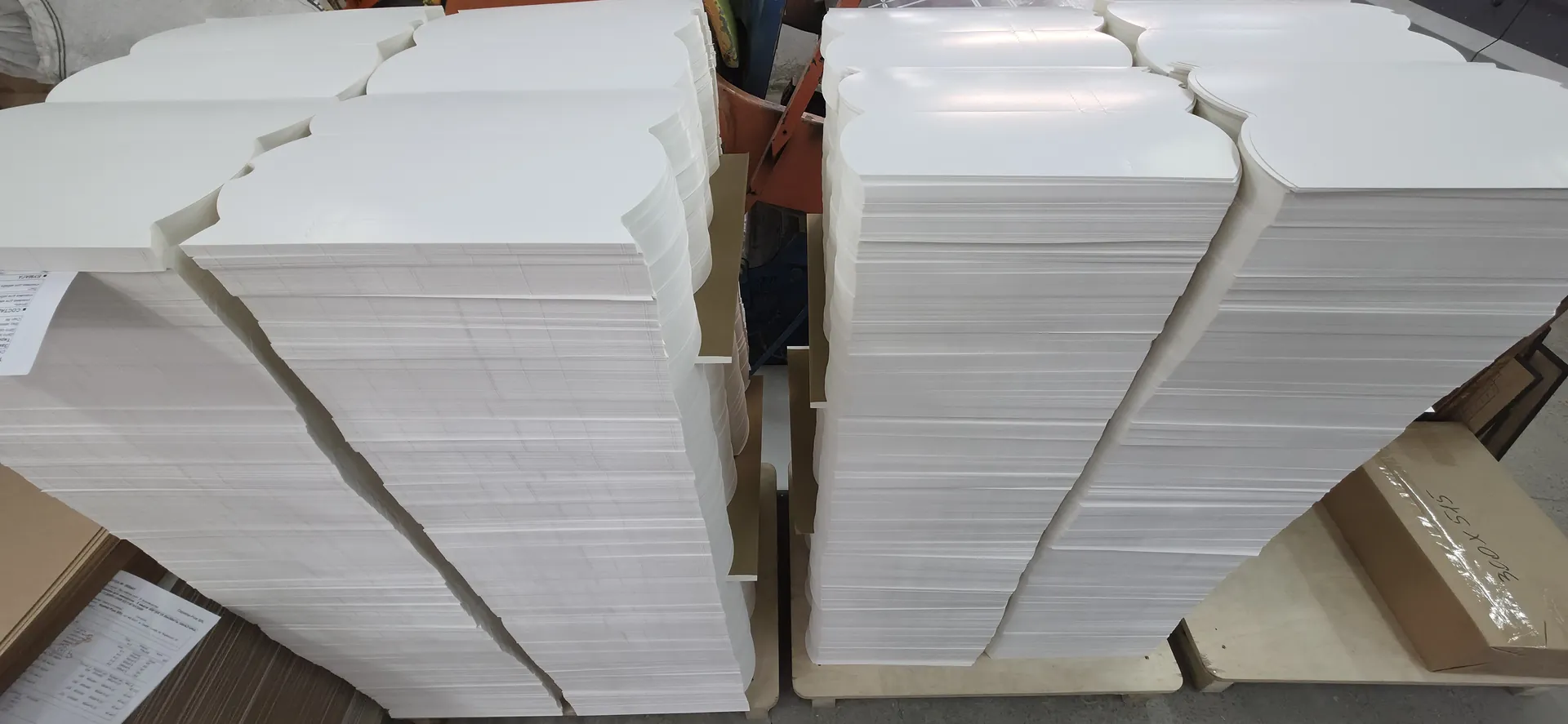
The solution. We started with a test box and checked the structure on samples, then moved on to serial runs: a body with a separate bottom, offset printing with water-based dispersion varnish, spot UV varnish and foil stamping.
The result. Since spring 2024 — 11 serial runs, about half a million boxes. Each run carries two to four flavours, and some flavours have separate versions for Moldova and Romania.

Order parameters
| Parameter | Value |
|---|---|
| Client | Rifero (VIONISERVICE S.R.L.), candy made of dried fruit and nuts in chocolate |
| Orders | 17 since March 2024, of which 11 serial runs |
| Products | candy boxes for 200–230 g and for 500 g; self-adhesive stickers |
| Structure | a body with a separate bottom, automatic gluing |
| Material | coated board 220–285 g/m² |
| Finishing | offset CMYK with in-line water-based dispersion varnish, spot gloss UV varnish, gold or silver foil stamping |
| Runs | usually 40,000–60,000 boxes, from 15,000 to almost 80,000; 2–4 flavours per run |
The figures come from the technical specifications of 2024–2026 orders in our production system.
How the work went
- A test before the series. First came a trial run of the box and two structural samples, and only then the serial runs.
- Several flavours in one run. The flavours are printed together, so the background, foil and varnish match across the whole range — on the shelf the boxes look like one series.
- Three layers of finishing. Every run gets the same finish: offset printing with in-line water-based dispersion varnish, spot gloss UV varnish and gold or silver foil stamping.
- Repeats on existing tooling. The cutting die was made in five orders and the stamping die in four; all other runs went on the existing tooling, from the same technical specification.
Why it works
Serial packaging lives on repeats. The printing and finishing parameters are recorded in the technical specification and the tooling is kept at our plant, so a run ordered three months later looks like the first one. A new flavour is added by changing the artwork, not the structure, and a version for another market is a separate item within the same run.
Have a similar task?
Email contact@pergament.md or call +373 79 044 417: send the weight and dimensions of your product, the number of flavours and the quantity — we will pick the structure and make a sample: box prototype from 30 minutes.
More about the products: “Confectionery boxes”; the process — “Order process”. A similar story — the Dulcinella case study; the rest — all case studies.